
NATO is revising its methods of countering potential Russian escalation and is developing a defence strategy that foresees abandoning previous restrictions in favour of delivering conventional strikes far inside Russian territory.
Source: The Wall Street Journal
Details: The experience of the wars in Ukraine and the Middle East is forcing military commanders to review methods of countering the Russian army. For decades, the defence of NATO's eastern flank relied on erecting barriers and checkpoints. But after nearly five years of war in Ukraine, NATO's strategists have concluded that a potential Russian invasion cannot be foiled solely by impeding the advance of troops.
Quote from WSJ: "Deterring the Kremlin's conventional forces now requires more active prevention or, in military speak, denial. That entails not just blasting troops that might pour across borders, but also hitting military bases, supply depots and industrial facilities behind the front line, on Russia's home ground."
Details: Supreme Allied Commander Europe Alexus Grynkewich set out this approach in his own "theory of victory" , meaning that the Allies will first block the initial wave of attack and then deprive the enemy of the ability to continue the push.
Quote from Grynkewich: "We will break the warfighting system engaged against us by hitting both advancing forces and anything and everything that supports, sustains or controls that force."
Details: The WSJ highlights that the unveiled plan does not foresee transitioning to the use of nuclear weapons.
Polish Major General Ireneusz Nowak stressed that the key lesson of the Ukrainian resistance lies in the necessity to respond to the aggressor with force. He added that "defence also means striking back" .
Quote from Nowak: "We definitely would want to strike the defense-industrial base in a fight with Russia. We need to treat deep precision strike as deterrence."
Details: Nowak added that the Alliance's common message to Moscow must sound clear: "Don't do anything stupid, because we can punish you. But to be credible, we need to have those capabilities."
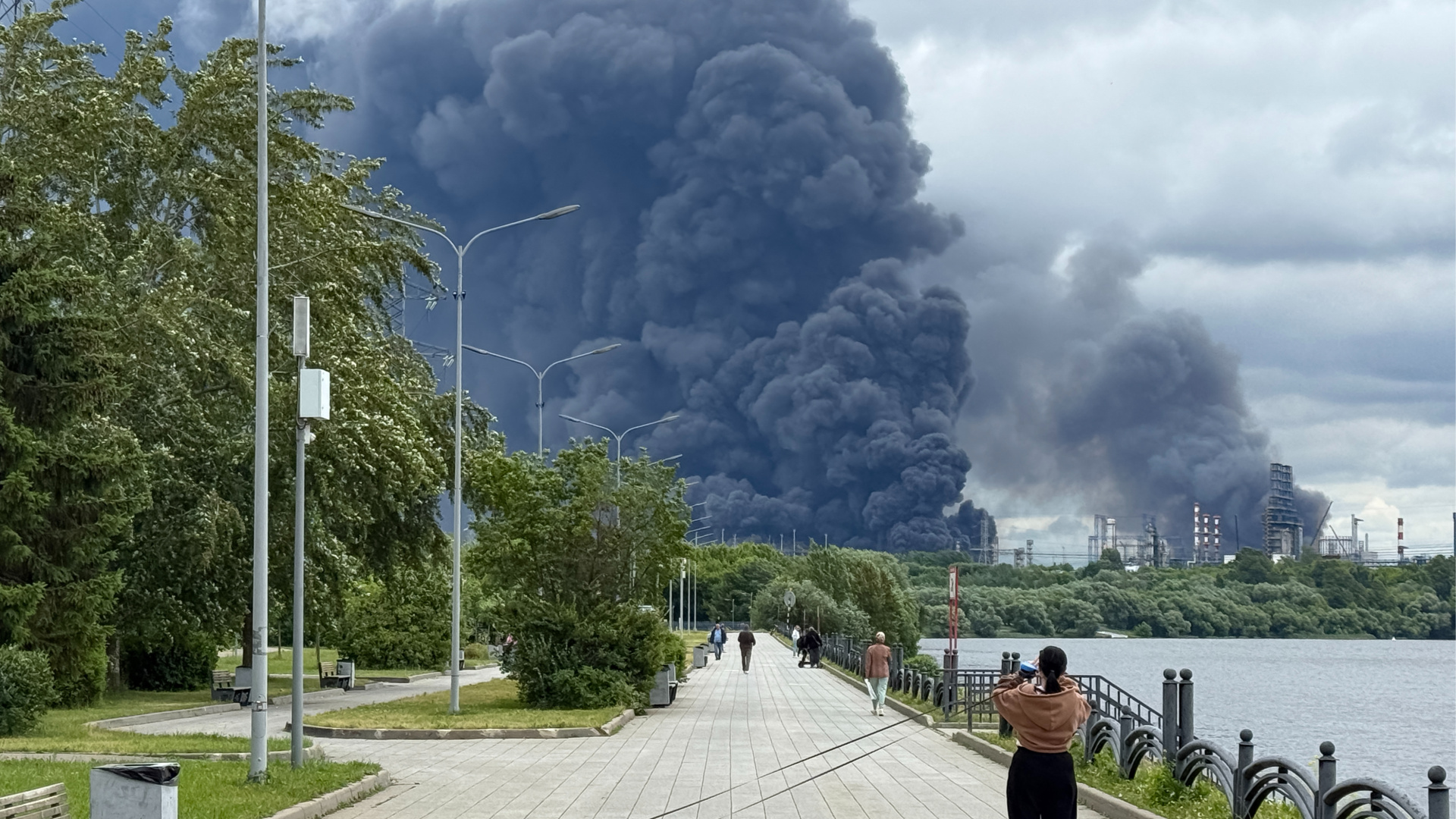
The strategy effectively mirrors the principle of "hitting an archer, rather than shielding from arrows" , which Ukraine is currently implementing by attacking Russian oil refineries, drone battery factories, data centres and fuel depots with long-range drones and missiles.
Ukraine's Ambassador to NATO Alyona Getmanchuk also emphasised the importance of long-range impact during a specialised conference. She compared air defence to a painkiller that "can alleviate the symptoms – but you need to target the source of the pain" .
To implement this doctrine, the US is modernising and replenishing stocks of Tomahawk long-range cruise missiles and ATACMS ballistic missiles. Meanwhile, European partners aim to expand stockpiles of Storm Shadow/SCALP and Taurus cruise missiles, as well as developing new low-cost long-range strike systems.
Fabian Hoffmann, senior researcher at the Norwegian Institute for Defence Studies, recalled that at least 48 projects for creating low-cost cruise missiles have been announced in Europe.
Quote from Hoffman: "What we've seen is that you don't want to be caught in a high-intensity conflict where your adversary has access to deep arsenals of long-range strike capabilities and not have them yourself."
Your support onPatreonhelps us keep the news free and accessible.