
The events on FlyDubai Flight 1073 from Dubai to Tel Aviv on 30 September 2026 reads like something out of one of my thrillers. But what occurred in the skies over Saudi Arabia was not fiction, it was real world and highlights an adage I learned long ago and has been repeated in various incarnations across social channels with differing attributions over the years — hope is not a course of action, in most cases, no one is coming to save you, you will need to be your own cavalry.
That means be prepared.
I am actually surprised that this or something like this has not happened previously — an unhinged pilot or co-pilot killing the other, perhaps suicidal, perhaps in search of martyrdom, as what some terrorist organizations call an istishhadi or "martyrdom seeker."
FORMER ISRAELI PM HAILS ‘HEROISM’ AFTER PASSENGERS HELP THWART ALLEGED COCKPIT ATTACK
With prior planning it is possible for pilots to work together in a "martyrdom operation" that would be much harder to thwart. Or a single pilot or co-pilot could work with other "muscle" sitting in first class to prevent passengers from doing what they did on September 30, giving the terrorist in the cockpit time to kill them all or once again turn an airliner into a weapon focused on a specific target.
I think about scenarios like this every time I fly.
I look at and evaluate the passengers, the flight attendants, and I always look in on the pilots as I enter the aircraft, searching for anything that does not look or feel right, remembering something a Vietnam-era Project Delta Army Special Forces soldier told me decades ago: "if it doesn’t look right, it’s probably not."
Trust your instincts — you have them for a reason.
I am also identifying assets and liabilities among those groups. Who is a potential asset if things go south? I’m noting shoes, belts, shirts, watches, hats, bags, sunglasses, tattoos, cauliflower ear, and filing away what that tells me about each person. Which of them are likely to help — and which of them may hinder in the event of an incident.
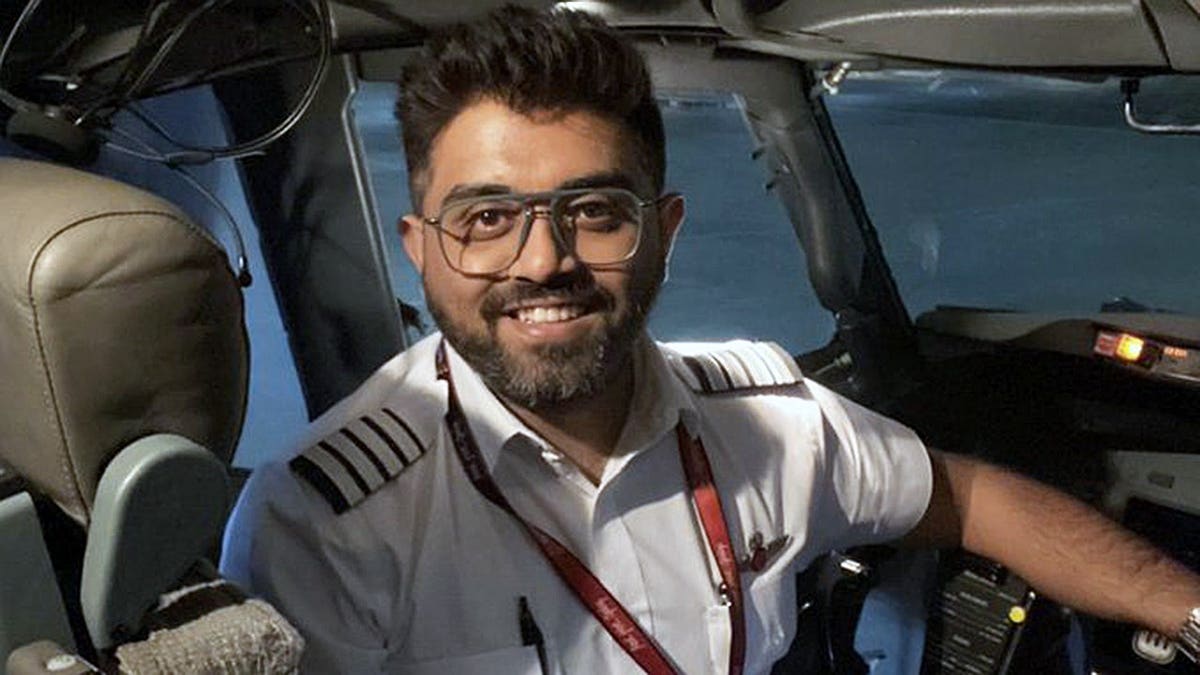
On September 30, the skies over Saudi Arabia were full of miracles. The pilot, Captain Smit Machchhar, was not immediately incapacitated in the initial knife attack and managed to open the cockpit door before collapsing. Passengers with the instinct to act, fight, and prevail were sitting near the front of the plane, one of the passengers had the wherewithal to pull back on the controls — something he remembered from watching a television show.
HERO FLYDUBAI PILOT SAYS HE WAS 'FIGHTING FOR MY LIFE' AS PLANE PLUNGED AFTER COPILOT ATTACK
And there happened to be a pilot or pilots onboard who were able land the plane. Incredible.
If any one of those things had not happened, we would be talking about a very different incident, one in which every single person on that flight is dead.
I weave a lot of history and the history of terrorism into my thrillers, and I also have a series of non-fiction books on terrorism, the second of which is on Pan Am 103 , a plane that exploded over Lockerbie, Scotland, on December 21, 1988, killing 259 passengers and crew and 11 residents on the ground. In that attack, there was no warning — a bomb detonated in the cargo hold at 31, 000 feet.
The destruction of Pan Am 103 horrified the world — and led to important changes in airline security, thanks in large part to pressure from victims’ families who pushed lawmakers to pass the Aviation Security Improvement Act of 1990. That legislation heightened the focus on domestic and international security, including placing federal security managers at major airports and requiring background checks on all air carrier workers. The law demanded the FAA work in tandem with the FBI, expanded scrutiny of overseas airports, and improved the flow of terrorist threat information.
AMERICA BUILT A FORTRESS AFTER 9/11. THEN THE THREAT STARTED HIDING IN PLAIN SIGHT
The recent FlyDubai event should lead to changes as well, namely enhanced pilot screenings. It is not just about qualifications and your ability to fly a plane — it’s about your background, associations, and your mental stability.
If, for example, a background check finds that instead of funding your 401(k) each month, you are diverting funds to Hezbollah or a charity funding terrorist organizations — an obvious red flag — you should not be a pilot and certainly should not be flying a plane full of Israelis into Tel Aviv.
This is common sense to most, but common sense seems to be in limited supply these days.
The model for hijackings and the use of terror focused on airlines was different before September 11, 2001. Typically, in the 1970 s and 1980 s, planes were hijacked and the passengers were exchanged for prisoners or ransomed — sometimes a passenger or passengers were killed to make a point.
SEN MCCORMICK: THE HEROIC PASSENGERS OF FLIGHT 93 SHOWED AMERICA HOW TO STAND UNITED
From a tactical security standpoint that meant that you would want a window seat so you were not in the aisle where you could be struck and injured or grabbed by a terrorist — you wanted to be able to survey the situation, bide your time, and act when appropriate.
On September 11, 2001, that paradigm shifted — planes and passengers were not being hijacked to bring about a political end or for a ransom, they were being turned into weapons. That adaptation by terrorists meant protectors needed to act quickly in the event of a hijacking. They moved from window seats to aisle seats to be in an advantageous position to recognize the threat and take immediate decisive action. And by "protectors" I do not mean military or law enforcement, I mean citizens. I am referring to those who have not suppressed the will to fight and have not outsourced their protection to a government or outside entity who is not coming to save them.
Protecting those who cannot protect themselves is our responsibility as citizens, as husbands, as fathers. The FlyDubai incident is an example of that duty and of the warrior mindset — from the pilot to the passengers who all acted heroically to save the day.
Col. John Boyd developed something called the OODA Loop — Observe, Orient, Decide, Act. In combat, in most cases, whoever does that faster than their opponent — or who can disrupt their enemy in the middle of their loop — will be victorious. That is what the pilot and passengers did on the FlyDubai flight. They stepped up and tapped into that primal urge to live and to protect that is in all of our DNA — and they prevailed.
The enemy will learn and adapt to September 30, 2026.
Next time it might be both pilots or it might be one incapacitating the other, working in conjunction with a passenger or passengers who will block access to the cockpit. We must adapt as well to ensure those with mental disorders or associations with terrorist organizations or those who fund them are kept from the ranks of the aviators we all trust with our lives.
As John Steinbeck writes in The Acts of King Arthur and his Noble Knights, "‘Now — I will lay down the law, and you will learn it word by word, and every word must be edged with fire. This is the law. The purpose of fighting is to win. There is no possible victory in defense. The sword is more important than the shield, and skill is more important than either. The final weapon is the brain, all else is supplementary.’"
Remember — hope is not a course of action.
In most cases, no one is coming to save you. Your mind is the ultimate weapon, and you will need it, coupled with the will to fight, to save yourself and your loved ones, and in this case, an entire plane full of innocent people.
Be prepared.